What the Rock Remembers: The Hidden Role of Peak District Water in Every Derbyshire Distillery Spirit
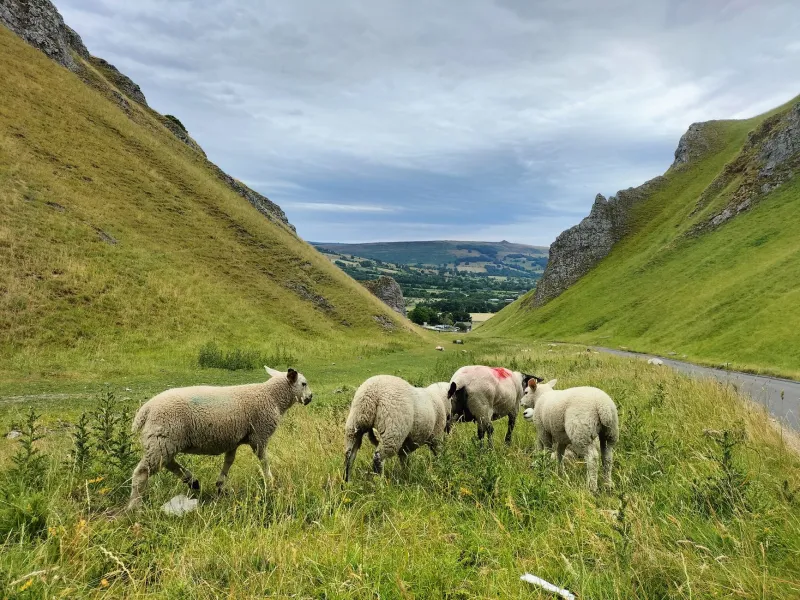
There is a moment, when walking the limestone dales of the Peak District, where the landscape feels less like scenery and more like geology made visible. The pale grey crags, the clear rivers threading through narrow valleys, the springs that emerge unbidden from hillsides — all of it is the surface expression of something far older and far deeper. For Derbyshire Distillery, that something is the very foundation of what we make.
Water is the most abundant ingredient in any spirit. It dilutes the distillate to bottling strength. It carries flavour compounds through the still. It shapes mouthfeel, integration, and finish in ways that are subtle but unmistakable to anyone who has tasted carefully. And yet, in the broader conversation about what makes a craft spirit distinctive, water is frequently the last element discussed — overshadowed by botanicals, grain provenance, or barrel selection.
We believe that is a significant oversight. The water beneath Derbyshire's hills has a story to tell, and it tells that story in every glass.
A Geological Education, Drawn in Limestone
The Peak District sits atop one of England's most complex and ancient geological formations. The White Peak — the southern and central portion of the national park, where limestone dominates — was formed from the compressed remains of a tropical sea that covered this region roughly 350 million years ago. Coral reefs, shellfish, and marine organisms accumulated over aeons, compressing into the pale carboniferous limestone that now defines the landscape.
Rainwater, which is naturally slightly acidic due to dissolved carbon dioxide, percolates through this limestone over centuries, dissolving calcium and magnesium carbonates as it descends. The result is water of notable hardness — rich in dissolved minerals, particularly calcium bicarbonate. This is not impurity. This is character, accumulated over geological time.
When that water eventually emerges as a spring, or is drawn from a borehole sunk into the aquifer, it carries with it a mineral signature as specific to this place as a fingerprint. It is, in the truest sense, liquid terroir.
Why Mineral Content Matters in Distillation
The word 'terroir' originates in viticulture, where it describes the complete natural environment — soil, climate, topography, and geology — that gives a wine its sense of place. Wine writers have long argued that a Burgundy tastes of Burgundy not simply because of the grape variety, but because of everything the vine drew from the earth beneath it.
Scottish distillers have made a parallel argument for decades. The peat-filtered water of Islay, the granite-softened streams of Speyside, the limestone-influenced springs of the Highlands — each is held up as a mark of regional provenance, a reason why a whisky made in one glen cannot simply be replicated elsewhere. The Scotch whisky industry has built an entire geography of flavour upon the premise that water source is destiny.
At Derbyshire Distillery, we hold the same conviction. And the science supports it.
Calcium ions in hard water interact with yeast during fermentation, improving yeast health and promoting more complete sugar conversion. This leads to a cleaner, more efficient fermentation and a wash — the fermented liquid that enters the still — with a more defined flavour profile. Magnesium, present in smaller quantities in our local water, acts as a yeast nutrient, further supporting fermentation vigour.
During distillation itself, the mineral content of the water used to reduce the spirit to bottling strength influences how flavour compounds behave. Softer water tends to emphasise lighter, more volatile aromatics; harder water can provide a rounder, more integrated character on the palate. Distillers who have worked with both will often describe the difference as a matter of cohesion — hard water spirits frequently feel more unified, less angular, in the glass.
This is not mythology. It is chemistry, played out on a landscape scale.
The Peak District as Provenance
Stand at the head of Lathkill Dale on a clear morning and look down into the valley below. The river Lathkill rises from springs within the dale itself — one of the few rivers in England to do so — and runs over a limestone bed so pale it appears almost luminous in bright light. The water is extraordinarily clear, rich in dissolved calcium, and entirely cold even in high summer. It has been flowing in some form since long before any human settlement recorded it.
This is the landscape that shapes our water. Not metaphorically — literally. The aquifer from which we draw sits within the same geological formation that produces the Lathkill, the Bradford, and the upper Wye. When we speak of being 'Crafted in the Peak District,' we are speaking of this: a direct, material connection between the ancient rock beneath our feet and the spirit in your glass.
That connection is what separates genuine provenance from mere geography. Any distillery can print a county name on a label. Fewer can point to a specific geological relationship between their landscape and their liquid.
Translating Terroir into Taste
For those accustomed to thinking about terroir exclusively in wine terms, translating the concept to spirits requires a slight adjustment of perspective. In wine, the grape itself is the primary conduit for terroir — the vine draws minerals and compounds directly from the soil. In distillation, the conduit is water, and the expression is more subtle, more integrated into the overall flavour architecture of the spirit.
In our gins, the limestone water contributes to a palate that our tasters consistently describe as smooth and rounded, with a long, clean finish that allows the botanical character to resolve gracefully rather than cut off abruptly. The hardness of the water appears to soften the transition between mid-palate and finish, providing what one might call structural generosity — room for the flavour to breathe and settle.
In our vodka expressions, where the absence of added flavour means that the base spirit and diluent water are more exposed, the mineral character of the Peak District water becomes more perceptible still. There is a weight to it, a presence, that distinguishes it clearly from spirits made with demineralised or artificially softened water.
These are not qualities we have engineered. They are qualities we have been careful not to engineer out.
A Commitment to Source
There are distilleries that treat water as a purely technical variable — something to be standardised, adjusted, and controlled until it conforms to a predetermined specification. We understand the logic. Consistency is a legitimate goal in spirit production.
But at Derbyshire Distillery, we have made a deliberate choice to work with our water rather than against it. We monitor its mineral content seasonally, understanding that slight variations occur as aquifer levels fluctuate with rainfall patterns across the moors. We adjust our process accordingly, rather than stripping the water of its character and starting from a blank slate.
In doing so, we accept a degree of natural variation — and we consider that variation a feature, not a flaw. The Peak District does not produce the same rainfall in January as it does in July. The aquifer responds to those changes over months and years. Our spirits, made with honesty and attention, carry a faint record of those rhythms.
That, ultimately, is what terroir means in practice: not the romanticised notion of a place captured in a bottle, but the genuine, traceable influence of a specific environment on a specific product. The limestone remembers the sea that made it. The water remembers the rock it passed through. And the spirit, if made with sufficient care, remembers the water.
Every bottle we release from Derbyshire Distillery carries that memory. We think it is worth knowing about.