The Wild Larder Beneath Our Feet: How Peak District Botanicals Define Our Gin
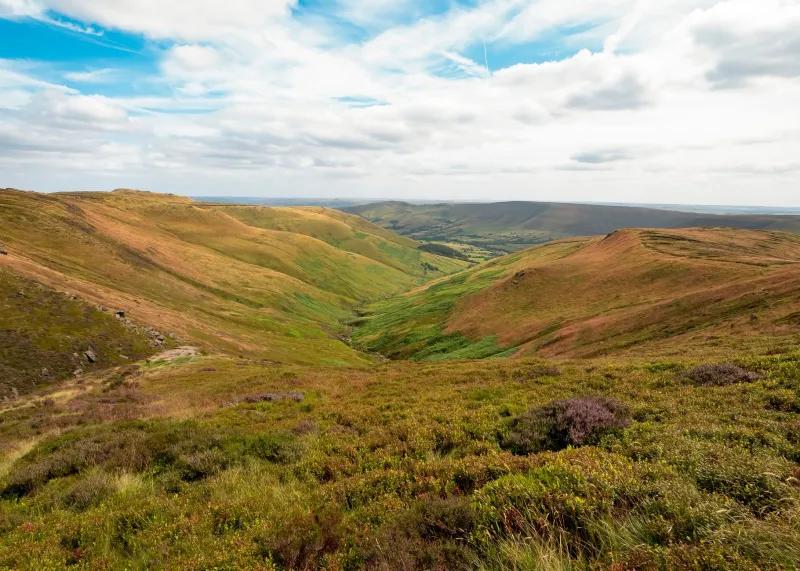
There is a particular quality of light on the Derbyshire moors in early August. The heather has come into full bloom, the air carries a faint sweetness, and the landscape — so austere in winter — feels almost extravagantly generous. It is precisely this generosity that informs the character of every gin we produce at Derbyshire Distillery. Long before a single botanical reaches the still, it exists as part of a living, breathing ecosystem that has shaped this corner of England for millennia.
For the discerning British drinker, the question of where a spirit comes from has become as meaningful as the question of how it is made. Terroir — a concept long associated with wine and whisky — is now firmly part of the conversation around premium gin. And few landscapes offer a more compelling answer to that question than the Peak District.
A Landscape Written in Flavour
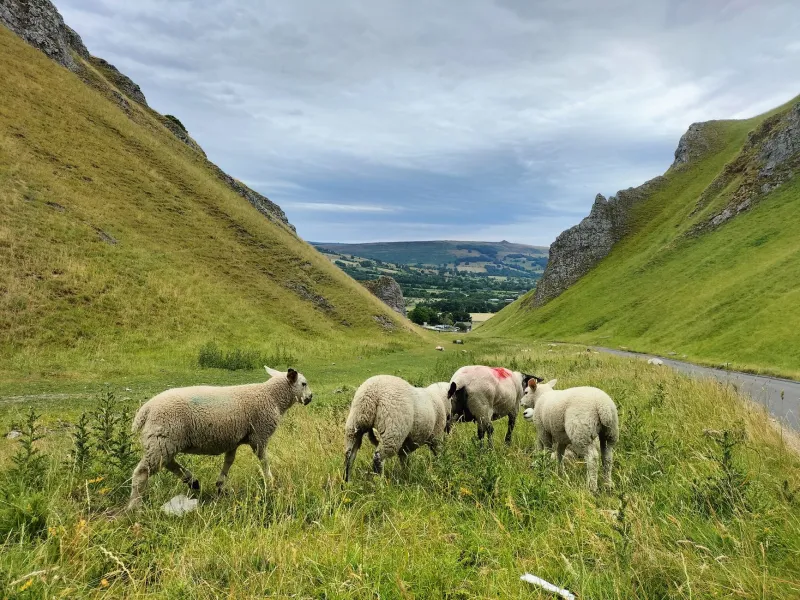
The Peak District is not one landscape but many. The Dark Peak, with its gritstone edges and blanket bogs, gives way to the softer White Peak — a terrain of limestone dales, wildflower meadows, and ancient hedgerows. Each microhabitat produces its own botanical character, and our foraging practice respects and reflects this variety.
Heather (Calluna vulgaris) is perhaps the most iconic of the moorland botanicals. Harvested in late summer when the flowers are at their most aromatic, it contributes a delicate floral note — subtly honeyed, with a faint earthiness that speaks directly of the upland peat. Bilberry (Vaccinium myrtillus), found growing low across acidic moorland soils, adds a gentle fruit dimension: not the jammy sweetness of cultivated blueberry, but something wilder and more restrained, with a slight tartness that lifts the palate.
Descend from the moors into the limestone valleys, and the botanical palette shifts entirely. Wild thyme (Thymus polytrichus) colonises the thin soils of the dale sides, its scent intensifying in warm weather. In the still, it translates as a clean, herbal brightness — a counterpoint to the softer floral notes from the moorland. Hawthorn blossom, gathered in May from the gnarled trees that line ancient field boundaries, brings a complex, almost almond-like quality that adds depth without heaviness.
The Discipline of Seasonal Foraging
Working with wild botanicals demands a relationship with the calendar that the industrial spirits industry has largely abandoned. There are no shortcuts. Heather cannot be harvested in April; hawthorn blossom will not wait until June. Our production schedule is, in a very real sense, dictated by the land rather than by commercial convenience.
This seasonal rhythm imposes a discipline that we consider a strength rather than a limitation. Each botanical is gathered at the precise moment of peak aromatic intensity — a window that can, in some cases, span no more than a fortnight. Our team works closely with experienced local foragers who possess an intimate knowledge of the landscape: which south-facing slopes warm earliest, which sheltered valleys hold moisture long enough to extend the bilberry season, where the thyme grows most densely.
Sustainability is integral to this practice. We operate strict harvesting guidelines, never taking more than a third of any individual plant, and we rotate our foraging areas to allow full regeneration. The Peak District's flora is not a resource to be extracted; it is a partnership to be maintained across seasons and years.
From Field Notes to Still
The journey from foraged botanical to finished spirit involves a series of craft decisions that are far from straightforward. Wild plants are, by their nature, variable. The aromatic intensity of a batch of heather will differ depending on the altitude at which it was gathered, the rainfall in the preceding weeks, and the precise stage of flowering. Our distillers taste and assess every botanical before it enters the recipe, adjusting quantities accordingly.
We employ a combination of maceration and vapour infusion to capture the full spectrum of each botanical's character. Delicate florals — hawthorn blossom, elderflower gathered from the dale margins — are better suited to vapour infusion, which preserves their high notes without the astringency that prolonged maceration can introduce. Heartier botanicals, such as dried bilberry and juniper, benefit from extended maceration, allowing their deeper, more resinous qualities to fully integrate with the base spirit.
The result is a gin in which the classic juniper backbone — essential, non-negotiable — is framed and enriched by botanicals that could not have come from anywhere other than this particular stretch of northern England. That specificity is not a marketing conceit. It is the product of genuine craft decisions made in response to a genuine place.
Why Provenance Matters More Than Ever
The British gin renaissance has produced no shortage of excellent spirits, but it has also produced a great deal of noise. Hundreds of new distilleries have launched in the past decade, many trading on broadly similar botanical profiles and broadly similar narratives. In this context, authentic provenance — the kind that is earned through long acquaintance with a landscape rather than assembled from a supplier catalogue — has become a meaningful differentiator.
UK consumers are increasingly sophisticated in their reading of spirits labels. They understand the difference between a gin that mentions the countryside and a gin that genuinely tastes of it. The growing interest in regional food and drink — accelerated, in part, by a broader cultural turn towards locality and seasonality — has created an audience that is actively seeking out spirits with a demonstrable connection to place.
At Derbyshire Distillery, that connection is not something we have constructed after the fact. It is the foundation upon which everything else is built. The Peak District gave us our water, as we have explored elsewhere; it also gives us our botanicals, our seasons, and — in the most fundamental sense — our identity as a distillery.
The Moor as Master Distiller
There is a temptation, in writing about craft spirits, to place the human maker at the centre of every story. The skill of our distillers is real and considerable. But we have come to think of the Peak District landscape itself as a kind of silent collaborator — one whose influence on the finished spirit is as profound as any decision made in the stillhouse.
The heather that colours our moors in August, the bilberries that ripen in sheltered hollows, the thyme that scents a limestone dale on a warm afternoon — these are not ingredients we have chosen so much as gifts we have been offered. Our craft lies in receiving them with care, understanding them with patience, and translating them, faithfully, into the bottle.
That, in the end, is what it means to make gin in Derbyshire.