Twenty-Four Hours, One Spirit: Inside a Full Production Day at Derbyshire Distillery
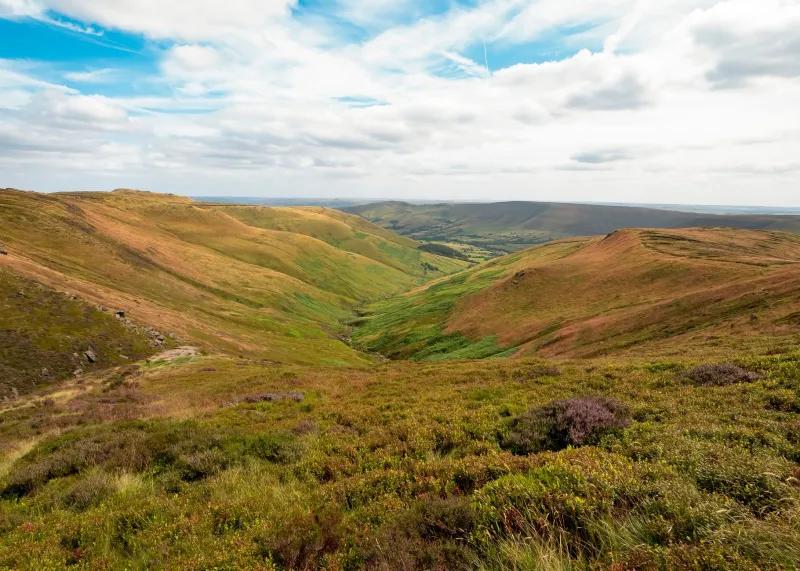
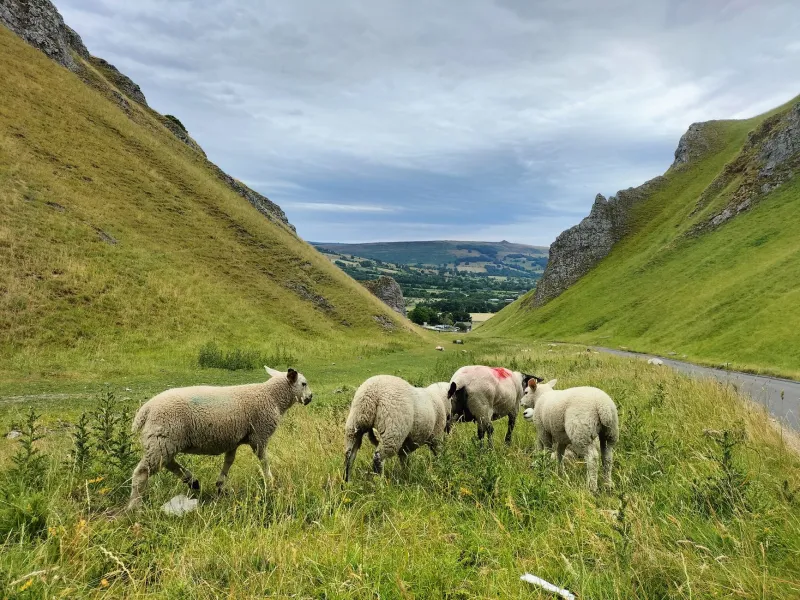
There is a particular quality to the Peak District at half past five in the morning. The light arrives slowly, feeling its way across the limestone edges and into the valley below. By the time it reaches the distillery yard, our head distiller, James, is already on his second cup of tea and reviewing the day's production log. The still needs checking. The mash tun requires cleaning down from yesterday's run. And somewhere across the yard, a delivery lorry is reversing through the gates with the morning's grain.
This is where every bottle begins — not with a label or a tasting note, but with a working day that most people never see.
06:00 — Grain Delivery and the First Decisions of the Day
The malted barley arrives from a supplier in Lincolnshire, sacked and palletted, carrying with it the particular earthy sweetness that experienced distillers recognise before they even open a bag. Our production team inspects each delivery carefully. Moisture content matters. So does the quality of the malt modification — the degree to which the grain's starches have been made accessible for fermentation. A batch that looks fine on paper can still disappoint in practice, and James has the experience to know the difference.
This early-morning scrutiny is not pedantry. It is the first of dozens of decisions that will determine the character of the finished spirit. At Derbyshire Distillery, we do not treat any stage of production as routine.
07:30 — Milling and Mashing
Once the grain has been approved, it moves to the mill. The grind must be consistent — fine enough to allow efficient starch conversion, coarse enough to prevent the resulting mash from becoming an unworkable paste. Our miller, Rachel, has an almost tactile relationship with the equipment, adjusting the gap between the rollers by feel as much as by measurement.
The milled grain — the grist — is then transferred to the mash tun, where it meets hot water drawn from our borehole. Peak District water is soft, low in mineral content, and extraordinarily clean. It does not impose itself on the flavour; it allows the grain to speak clearly. The temperature of the water is critical at this stage. Too cool and the enzymes that convert starch to fermentable sugar will work sluggishly. Too hot and those same enzymes are destroyed entirely. James targets a precise strike temperature and monitors the mash throughout its rest period, tasting the resulting liquid — the wort — for sweetness, clarity, and body.
10:00 — Fermentation: Where Flavour Begins in Earnest
The sweet wort is transferred to one of our fermentation vessels, where yeast is pitched and the transformation begins. Fermentation is often described as a purely chemical process, but anyone who has spent time in a working distillery knows it feels like something more organic than that. The vessel hisses and bubbles. The temperature climbs. A particular fruity, bready aroma fills the room that is quite unlike anything else in the distillery.
Our fermentation periods run longer than many commercial operations would consider economical. We allow the yeast sufficient time to produce the complex congeners — the flavour compounds — that give our spirits their character. Cutting the ferment short would save time. It would also flatten the flavour profile in ways that no amount of careful distillation can fully recover.
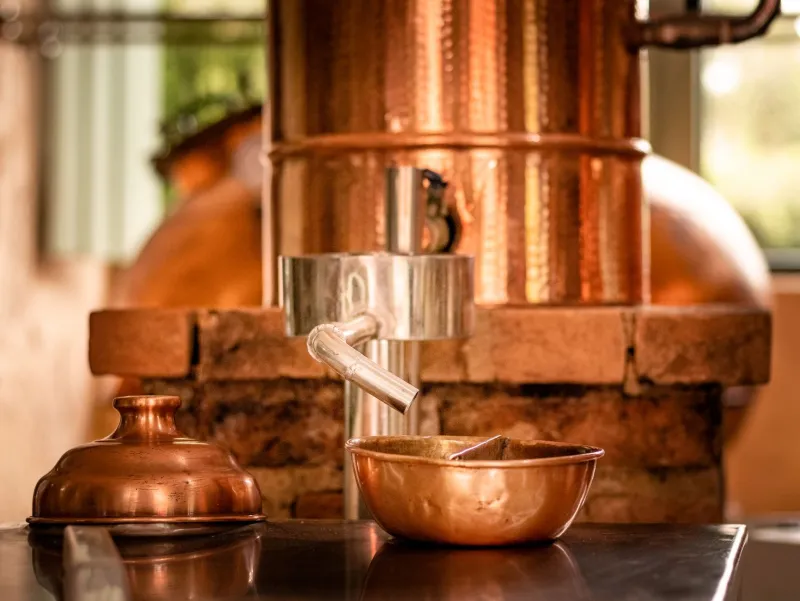
While the fermentation works, the rest of the team turns to other tasks. Labels are checked against the day's bottling schedule. The copper pot still is inspected, its joints and seals examined with the thoroughness of a pre-flight check.
13:00 — Distillation: The Art of the Cut
If there is a single moment in the production day that demands the most concentrated human skill, it is the distillation run — and specifically, the process of making cuts.
As the wash moves through the still and vapour rises through the copper column, the distillate emerges in distinct phases. The foreshots — the very first liquid to come over — carry volatile compounds including methanol and other undesirable elements. These are always discarded. Then comes the heads, which retain some useful flavour but also harsh, solvent-like notes. The hearts are what we are after: the clean, characterful core of the spirit. Finally, the tails arrive, heavier and oilier, carrying flavours that can add depth in small quantities but quickly become cloying.
Deciding precisely when to make each cut — when to switch collection vessels and capture the hearts — is the most consequential judgement of the day. James makes this call using a combination of instruments and direct sensory evaluation. He checks the temperature of the still head. He observes the flow rate. He holds a small sample glass to the light, noses it, tastes it, and decides. No two runs are identical, and no piece of equipment can replicate the informed instinct that experience provides.
"You're always listening to the still," he says, during a brief pause between checks. "It tells you things if you're paying attention."
15:30 — Dilution, Resting, and Quality Assessment
The new-make spirit that emerges from the still is typically far too strong for bottling. Dilution with water — again, our local Peak District source — brings the spirit down to its intended bottling strength. This is a careful, gradual process. Adding water too quickly can cause the spirit to louche or develop off-notes. The diluted spirit is then assessed by our quality team, who evaluate it against our house style benchmarks.
Some batches proceed directly to bottling. Others are set aside to rest in vessel, allowing the spirit to integrate and settle before release. This patience is not incidental to our brand — it is central to it.
17:00 — Bottling, Labelling, and the Final Presentation
The bottling line is where the spirit acquires its identity as a finished product. Bottles are filled to precise volumes, sealed, and passed along to the labelling station. Our labels are applied by hand, a deliberate choice that slows the process but ensures a standard of finish that automated systems rarely match on small batch runs.
Each bottle is inspected before it is packed. Fill level, label alignment, capsule integrity — every detail is checked. This is the last point at which we can catch an imperfection before a bottle reaches a customer's hands, and we treat it accordingly.
By early evening, the day's production run is complete. The still is cleaned down, the fermentation vessels are checked, and the yard is quiet again. James signs off the production log, noting the cut points, the temperatures, and any observations worth carrying into the next run.
The Craft Behind Every Bottle
What this account cannot fully convey is the cumulative weight of all these decisions — the way that each small act of care and attention compounds across an entire production day to produce something genuinely distinctive. Making premium spirits in the Peak District is not a romantic abstraction. It is early mornings, careful observation, and the willingness to slow down when the process demands it.
Every bottle that leaves Derbyshire Distillery carries the evidence of that discipline. We think that is worth knowing.