From Flask to Final Bottle: The Exacting Art of Spirit Selection at Derbyshire Distillery
There is a particular kind of silence that settles over the tasting room on evaluation days. Rows of unlabelled sample flasks catch the morning light filtering through the stone-framed windows, and the only sounds are the occasional scratch of a pencil and the soft clink of glass against the wooden bench. This is where Derbyshire Distillery spirits are either given a future or quietly retired.
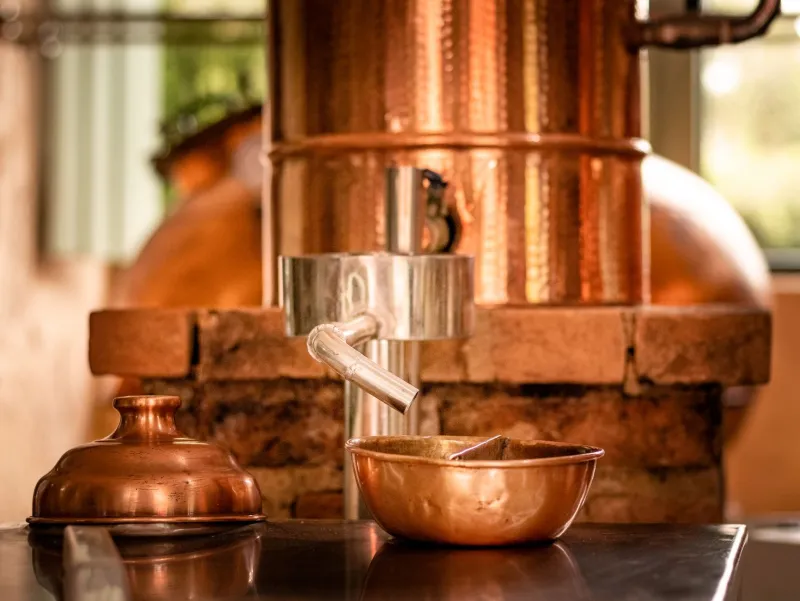
The romance of craft distilling is well documented — the copper stills, the hand-selected botanicals, the limestone-filtered water drawn from beneath the Peak District plateau. What receives considerably less attention is the disciplined, occasionally ruthless process that stands between an experimental batch and a finished product bearing our name. That process belongs, above all others, to our lead blender.
The Weight of the Decision
It would be tempting to imagine spirit selection as a pleasurable exercise — a leisurely afternoon sampling fine liquids in agreeable surroundings. The reality is rather more demanding. Our lead blender approaches each evaluation session with the same structured methodology applied to any serious technical discipline. Every sample is assessed blind where possible, removing any attachment to the conditions under which it was produced.
"The still doesn't know whether you had a good day," our blender notes. "It doesn't care that the botanicals were particularly fine that week, or that the team worked exceptionally hard. The liquid either speaks for itself or it doesn't."
Each batch is assessed across four primary dimensions: aroma, palate, texture, and finish. Notes are recorded in longhand — a practice our blender maintains deliberately, arguing that the act of writing slows the mind sufficiently to catch details that a quick digital entry might overlook. Those notebooks, accumulated over years of production, represent one of the distillery's most candid internal archives.
When Batches Fail
Not all failures are dramatic. Some of the most instructive rejections involve spirits that are, by any reasonable measure, perfectly acceptable. They simply lack the character that justifies a Derbyshire Distillery release.
"Competent but unremarkable is, in some ways, harder to manage than an obvious flaw," our blender explains. "A genuine fault — an off-note, an imbalance — is straightforward to identify and document. A spirit that is merely fine presents a more philosophical problem. Fine is not what we are here to produce."
There have been batches where a single botanical has overwhelmed the intended profile, rendering weeks of careful preparation commercially unusable. There have been gin experiments where a locally foraged ingredient — sourced with considerable effort from the moorland above the distillery — introduced a bitterness that no amount of redistillation could resolve. These batches are recorded in detail, not discarded without reflection. The notebook entries from failed experiments frequently inform subsequent successes.
One particular case stands out in the recent history of the distillery: a small-batch whisky-style spirit aged in an unusual combination of casks that, after eighteen months, had developed a profile so aggressively tannic as to be unpleasant. The batch was set aside. Six months later, blended with a complementary spirit at a ratio arrived at through careful incremental testing, it became the foundation of a limited release that drew considerable attention from industry reviewers. Failure, properly documented, has a habit of becoming instructive.
The Role of Intuition
For all the structured methodology, there is an element of the selection process that resists systematic description. Our blender refers to it, with characteristic understatement, as "accumulated instinct" — the capacity, developed over thousands of individual assessments, to sense when a spirit has something worth pursuing even before the formal evaluation is complete.
"You develop a feel for potential," they say. "A spirit can be rough at this stage and still tell you something. There's a quality in the aroma — a complexity beneath the surface noise — that suggests it will develop into something worthwhile if given the right conditions. Equally, a very clean, technically accomplished spirit can leave you cold. It has nowhere interesting to go."
This intuition is not infallible, and our blender is candid on that point. There have been occasions when a batch championed through early evaluation has ultimately failed to develop as anticipated. There have been others dismissed prematurely that, in retrospect, deserved more patience. The notebook records both.
Unexpected Discoveries
Some of the distillery's most distinctive releases have emerged not from deliberate innovation but from the careful observation of unexpected results. A botanical maceration left fractionally longer than intended. A distillation run interrupted and restarted under slightly altered conditions. A cask that behaved differently from its neighbours in the maturation warehouse.
The discipline of the selection process lies partly in recognising these departures not as errors to be corrected but as potential opportunities to be examined. "Craft distilling operates within parameters, but it is not a purely mechanical process," our blender observes. "Variability is not the enemy. Unexamined variability is."
One of the distillery's current signature expressions traces its origin to precisely this kind of accidental discovery — a botanical combination that emerged from a batch where two separate preparations were inadvertently combined during production. The result was sufficiently arresting to prompt a formal evaluation, a period of deliberate reproduction, and eventually a considered decision to develop it into a permanent release. The original accident is documented, without embarrassment, in the notebook.
The Final Call
Ultimately, the decision to release a spirit rests on a combination of the formal assessment scores, the blender's qualitative notes, and a broader consideration of how the product sits within the existing Derbyshire Distillery range. A spirit that is technically excellent but redundant — too similar to an established expression — may still be withheld, or held in reserve for a future limited edition where its character can be properly contextualised.
"We are not simply producing units," our blender reflects. "We are building a body of work. Every bottle that carries the distillery's name is an argument for a particular idea of what craft spirits from this part of the world can be. That argument needs to be coherent."
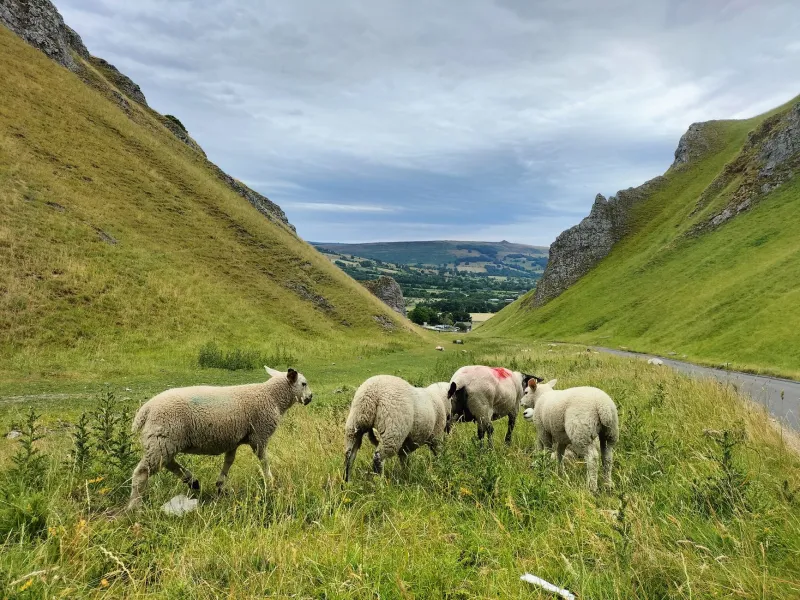
The Peak District has always demanded a certain seriousness from those who work within it. The landscape does not flatter carelessness. In that respect, the tasting room at Derbyshire Distillery is simply an extension of the environment that surrounds it — a place where standards are held not because they are comfortable, but because they are necessary.