Rooted in Derbyshire Soil: The Farmers and Growers Behind Every Spirit We Make
The conversation about terroir in spirits has, until relatively recently, focused almost exclusively on botanicals and water. These are the romantic ingredients — the hedgerow elderflower, the limestone-filtered spring — that lend themselves naturally to narrative. They are vivid, aromatic, and easy to describe.
But terroir, properly understood, begins much earlier in the process. It begins in the soil, in the seed, and in the decisions made by the farmers who grow the grain that will eventually be mashed, fermented, and distilled into the spirits that carry the Derbyshire Distillery name. Those decisions — about variety selection, soil management, harvest timing, and storage — leave their mark on everything that follows, even if that mark is subtle and rarely discussed in the context of finished flavour.
At Derbyshire Distillery, we have spent considerable time and effort building relationships with local agricultural producers whose values align with our own. This is not merely a supply chain consideration. It is a philosophical commitment to the idea that a spirit made in Derbyshire should, as far as possible, be made of Derbyshire — from the ground up.
Why Local Grain Matters
The argument for sourcing grain locally is sometimes framed in terms of sustainability, and that argument is entirely valid. Shorter supply chains reduce transport emissions, support the regional economy, and allow for a degree of traceability that global commodity markets cannot offer. But at Derbyshire Distillery, the sustainability case, compelling as it is, is secondary to a more fundamental question: does the grain taste better?
The honest answer is that it depends — on the variety, the season, the soil, and the farmer. But the honest answer also includes this: when you know your supplier, when you can visit the farm and walk the fields and understand the conditions in which the barley was grown, you are in a position to make far more informed decisions about how to handle that grain in the distillery. You can adjust your process to suit the raw material rather than forcing the raw material to suit a standardised process.
This is the practical advantage of proximity, and it is one that we have come to regard as essential rather than optional.
The Farmers We Work With
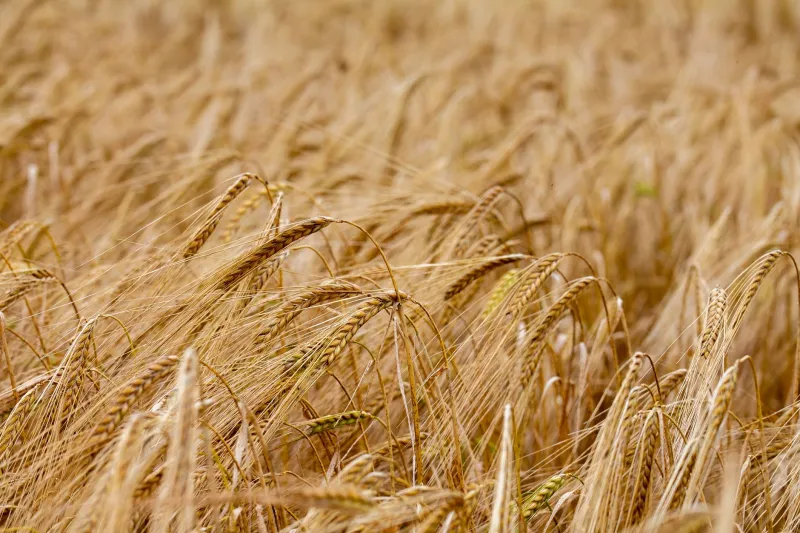
Our primary grain supplier is a family farm located in the Derwent Valley, where the combination of well-drained alluvial soils and a relatively sheltered microclimate has produced excellent malting barley for generations. The farm has been in the same family for over eighty years, and the current operator, who took over from his father in the early 2000s, has introduced a number of soil health practices — including cover cropping and reduced tillage — that have improved both the quality and the consistency of the grain he produces.
"The soil is everything," he told us during a visit last autumn, standing at the edge of a field that had recently been harvested. "If you look after the soil, the soil looks after the crop. It's not complicated, but it takes time to see the results. You have to be patient."
Patience, it turns out, is a quality shared by farmers and distillers alike.
The barley we receive from this farm is not a commodity variety selected for yield. It is a heritage-adjacent cultivar that produces lower volumes per hectare but delivers a grain with a higher protein structure and a more complex sugar profile — characteristics that translate, through fermentation, into a wash with greater aromatic depth. The difference is not dramatic in any single step of the process, but it accumulates. By the time a spirit distilled from this grain is assessed in the still room, the quality of the raw material is evident.
We also work with a smaller operation in the eastern fringes of the county, closer to the Nottinghamshire border, where wheat is grown primarily for our grain spirit production. This farm operates on organic principles and has done so for over fifteen years. The wheat it produces is not certified organic in the formal sense — the certification process is costly and the farmer has prioritised investment in soil infrastructure over labelling — but the growing practices are rigorous and the resulting grain is consistently clean and flavourful.
Grain Selection as a Creative Decision
One of the less visible aspects of our production process is the degree to which grain selection functions as a creative decision rather than a purely logistical one. When we are developing a new expression or refining an existing one, the grain is among the first considerations — not an afterthought.
Different barley varieties, for instance, produce fermentations with distinct flavour characteristics. Some yield a wash that is light and clean, suited to spirits where botanical or cask character is intended to dominate. Others produce a wash with more inherent complexity — earthy, slightly nutty notes that persist through distillation and contribute to the spirit's mid-palate. Choosing between them is a creative act, informed by our understanding of what the finished spirit should ultimately express.
This is why the relationship with our farmers matters beyond mere supply. When we can discuss the specifics of a harvest — the sugar levels, the protein content, the moisture at intake — with someone who grew the grain and understands its characteristics, we are better equipped to make those creative decisions well.
Sustainability as a Shared Value
The farms we work with are, without exception, operations where sustainability is understood as a long-term investment rather than a marketing position. The practices they employ — soil health management, water conservation, responsible use of inputs — reflect a commitment to the land that extends well beyond the commercial relationship they have with us.
At Derbyshire Distillery, we reciprocate that commitment in practical terms. We offer multi-year supply agreements that provide income certainty for our farming partners, which in turn allows them to invest in the soil and infrastructure improvements that benefit grain quality over time. We also return spent grain from our mashing process to local farms for use as livestock feed — a small but meaningful contribution to the circular relationship between distillery and land.
We are under no illusions about the scale of these efforts relative to the challenges facing British agriculture. But we believe that craft producers have a particular responsibility to demonstrate that a different model is possible — one in which the relationship between maker and grower is built on mutual respect, shared values, and a genuine commitment to the place in which both operate.
The Taste of a Place
There is a moment, during our guided tastings, when we ask visitors to consider what they are drinking not merely as a spirit but as an expression of a specific geography. The water that diluted the wash came from the limestone aquifer beneath the Peak District. The botanicals that flavoured the gin grew on moorland a few miles from where we stand. And the grain that provided the fermentable sugars at the heart of the spirit was grown in Derbyshire soil, by Derbyshire farmers, under Derbyshire skies.
That accumulation of provenance is not incidental to the flavour. It is the flavour. And it begins, long before the still is lit, in the relationship between a distillery and the farmers who make it possible.